InkLedger is reader-supported. When you buy through links on our site, we may earn an affiliate commission. This helps us keep tracking those ink prices.
Canon vs. Epson Ink: Which Brand Offers Better Value for Home Printing?
Phone cases - Sponsored - 15% off first order
Phone Case Gift - They pick the model · 2 minutes Code FIRST15GIFT
Choosing between Canon and Epson for your home printing needs often boils down to more than just printer price. The ongoing cost of ink cartridges plays a significant role in the long-term value proposition. Both brands offer a range of printers catering to different needs, from basic document printing to high-quality photo reproduction. But which brand ultimately offers better value when you factor in ink costs, print quality, and page yield? Let’s dive into a detailed comparison.
Understanding the Ink Landscape: OEM Cartridges and Beyond
Before we get into specifics, it’s crucial to understand the different types of ink cartridges available. Original Equipment Manufacturer (OEM) cartridges, produced by Canon and Epson themselves, are generally considered the gold standard for quality and reliability. However, they also come with the highest price tag.
Then there are compatible cartridges, manufactured by third-party companies. These are often significantly cheaper than OEM cartridges, but their quality and reliability can vary. We’ve tested many third-party brands and found some that offer excellent performance at a fraction of the cost (check out our article on Top-Rated Third-Party Ink Brands That Won’t Void Your Warranty). Finally, ink refill kits offer the potential for even greater savings, but require more hands-on effort.
Key Factors to Consider When Comparing Ink Value
Evaluating the value of Canon vs. Epson ink requires a look at several key factors:
- Price per Cartridge: This is the most obvious factor. How much does a single black or color cartridge cost from each brand?
- Page Yield: How many pages can you expect to print with a single cartridge? This is crucial for calculating the cost per page.
- Print Quality: Does the ink produce sharp text and vibrant colors? Is it resistant to smudging and fading?
- Printer Price: While this article focuses on ink, the initial cost of the printer itself influences the overall value.
- Ink Type: Canon typically uses dye-based inks for color cartridges and pigment-based inks for black cartridges, while Epson historically favored pigment-based inks across the board. This affects print quality and archival properties.
- XL Cartridge Availability: Do both brands offer high-yield (XL) cartridges that offer a lower cost per page?
Price and Page Yield: Crunching the Numbers
Let’s compare some popular Canon and Epson ink cartridges, considering both standard and high-yield options. Keep in mind that prices can fluctuate, so these are approximate figures for illustrative purposes.
Canon PG-245/CL-246 vs. Epson 212:
- Canon PG-245 Black (Standard Yield): Around $18, yields approximately 180 pages.
- Canon CL-246 Color (Standard Yield): Around $25, yields approximately 180 pages.
- Canon PG-245XL Black (High Yield): Around $28, yields approximately 400 pages.
- Canon CL-246XL Color (High Yield): Around $35, yields approximately 300 pages.
- Epson 212 Black (Standard Yield): Around $20, yields approximately 150 pages.
- Epson 212 Color (Standard Yield): Around $23, yields approximately 130 pages per color.
- Epson 212XL Black (High Yield): Around $30, yields approximately 500 pages.
- Epson 212XL Color (High Yield): Around $33, yields approximately 350 pages per color.
Cost per Page Calculation:
- Canon PG-245 Black (Standard): $0.10 per page
- Canon CL-246 Color (Standard): $0.14 per page
- Canon PG-245XL Black (High Yield): $0.07 per page
- Canon CL-246XL Color (High Yield): $0.12 per page
- Epson 212 Black (Standard): $0.13 per page
- Epson 212 Color (Standard): $0.18 per page
- Epson 212XL Black (High Yield): $0.06 per page
- Epson 212XL Color (High Yield): $0.09 per page
What the Numbers Tell Us:
- Epson’s standard yield cartridges generally have a lower page yield than Canon’s, resulting in a higher cost per page.
- With XL cartridges, Epson’s black ink offers a slightly lower cost per page than Canon’s.
- Epson’s XL color cartridges also offer a competitive, and sometimes lower, cost per page than Canon’s XL counterparts.
Important Note: These are just examples. Cost per page will vary significantly based on the specific cartridge model and your actual printing habits. Always check the manufacturer’s stated page yield and consider your typical printing volume.
For specific Canon cartridges, like the Canon PG-245, you may want to explore the cheaper alternatives, including compatible cartridges and refill options. We have an article dedicated to this topic: Canon PG-245 Cheaper Alternatives: Compatible Cartridges vs. Refill Kits vs. OEM XL.
Print Quality and Ink Type: A Matter of Preference
While cost is a major factor, print quality is also crucial, especially for photos and graphics.
-
Canon: Canon printers are often praised for their photo quality, thanks to their use of dye-based inks for color. Dye-based inks tend to produce more vibrant and accurate colors, but they’re generally less resistant to fading than pigment-based inks. Canon typically uses pigment-based black ink in their printers, which provides sharp text and better resistance to smudging.
-
Epson: Epson has traditionally used pigment-based inks in many of their printers. Pigment-based inks are known for their archival qualities and resistance to fading and water damage. While pigment inks historically didn’t offer the same color vibrancy as dye inks, Epson’s technology has improved significantly, and their modern pigment inks deliver excellent color reproduction.
Ultimately, the best choice depends on your priorities. If you primarily print documents and text, the difference in print quality may be negligible. However, if you print a lot of photos, you might prefer the vibrancy of Canon’s dye-based inks or the longevity of Epson’s pigment-based inks.
Consider also that print heads can clog. Our pillar page on clogged printhead: when to clean vs. when to replace may be useful if one brand is particularly prone to this issue for you.
The Rise of Ink Tank Printers: A Game Changer?
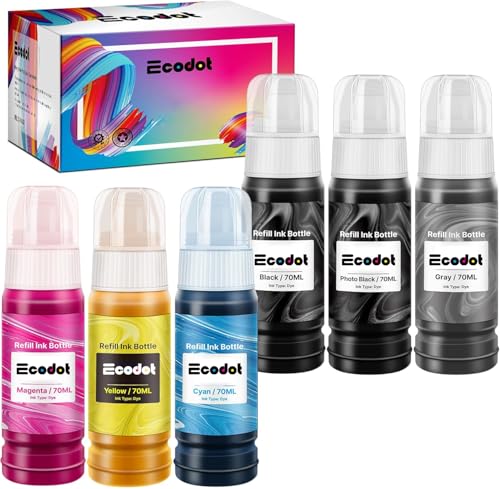
Both Canon and Epson offer ink tank printers (EcoTank for Epson, MegaTank for Canon) that use refillable ink tanks instead of traditional cartridges. These printers have a higher upfront cost, but the cost per page is significantly lower than cartridge-based printers.
- Upfront Cost: Ink tank printers typically cost significantly more than cartridge-based printers.
- Ink Cost: Ink bottles for refilling the tanks are much cheaper than cartridges.
- Cost per Page: The cost per page with ink tank printers is drastically lower, often less than a cent per page.
If you print frequently, an ink tank printer can save you a significant amount of money in the long run. We have a detailed comparison of these types of printers in our article, Ecotank vs. Megatank: The Ultimate Ink Tank Printer Showdown.
Example: The Epson EcoTank ET-2850 uses Epson 664 ink. A bottle of black ink costs around $15 and yields approximately 6,000 pages, resulting in a cost of just $0.0025 per page. Color bottles cost around the same and yield about 7,500 pages combined, or $0.002 per page.
Third-Party Ink Options:
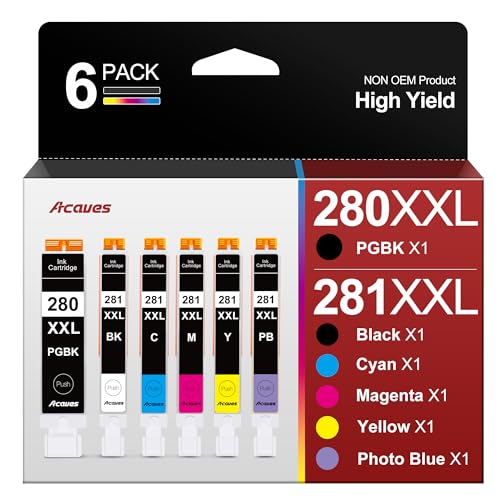
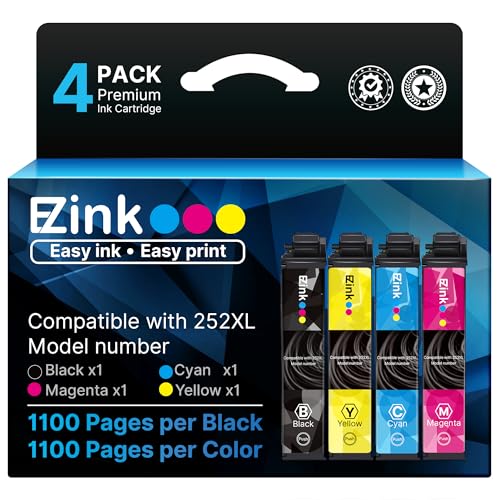
Don’t forget the option to use compatible ink cartridges or refill kits! While OEM cartridges boast guaranteed quality, third-party options can drastically lower your printing costs. We’ve extensively researched and tested various third-party ink brands, and some offer comparable quality at a fraction of the price. Just be sure to choose reputable brands with positive reviews. Refill kits, like the inkjet refill kit pro hp canon, offer even more savings, but require a bit more effort.
Conclusion: Which Brand Offers Better Value?
Phone cases - Sponsored - 15% off first order
Titan Case - Precision fit · 2,000+ designs Code FIRST15TITThere’s no definitive “winner” in the Canon vs. Epson ink debate. The best choice depends on your specific needs and printing habits.
- For occasional home printing with a focus on photo quality: Canon printers with dye-based color inks might be a better choice.
- For frequent document printing and archival quality: Epson printers with pigment-based inks could be more suitable.
- For high-volume printing and lowest cost per page: An ink tank printer from either Canon (MegaTank) or Epson (EcoTank) is the clear winner.
- For budget-conscious printing: Explore compatible ink cartridges and refill kits from reputable third-party brands, but always prioritize quality and reliability.
Before making a decision, consider your typical printing volume, the types of documents you print, and your budget. Carefully compare the cost per page of different cartridges and printers to determine which option offers the best long-term value for your needs. And remember, you can always save money by using XL cartridges, printing in draft mode, and avoiding unnecessary printing.
Watchdog picks
- B0GGYYBXP4Check on Amazon → · Buy on Amazon
- 65XL Ink Cartridges Black/Color Combo Pack High-Yield Replacement for HP Ink 65 Check on Amazon → · Buy on Amazon
- HP DeskJet 2855e Wireless All-in-One Color Inkjet Printer, Scanner, Copier, BestCheck on Amazon → · Buy on Amazon
- B07L2MZW6BCheck on Amazon → · Buy on Amazon
- B004QM8SLGCheck on Amazon → · Buy on Amazon
- B089CGSV4NCheck on Amazon → · Buy on Amazon
- Epson 522 EcoTank Ink Ultra-high Capacity Bottle Black & Color Combo Pack (T5221Check on Amazon → · Buy on Amazon
- 60W Adjustable Temperature Soldering Iron Kit - 9-in-1 With 5 Tips, Solder Wire Check on Amazon → · Buy on Amazon
Products in this guide
Phone cases - Sponsored - 15% off first order
Phone Cases For Charity - Every case supports a cause Code GIVE10
- Brother LC3013BK Individual High-Yield Black Ink CartridgeCheck on Amazon →
- Brother Printer LC30193PK Super High Yield XXL 3 Pack Ink Cartridges- 1 Ea: Cyan/Magenta/Yellow InkCheck on Amazon →
- Epson 502 Ink Cartridges, Black/Cyan/Magenta/Yellow, 4-PackCheck on Amazon →
- HP OfficeJet Pro 8125e Wireless All-in-One Color Inkjet Printer, Print, scan, Copy, ADF, Duplex Printing Best-for-Home OCheck on Amazon →