
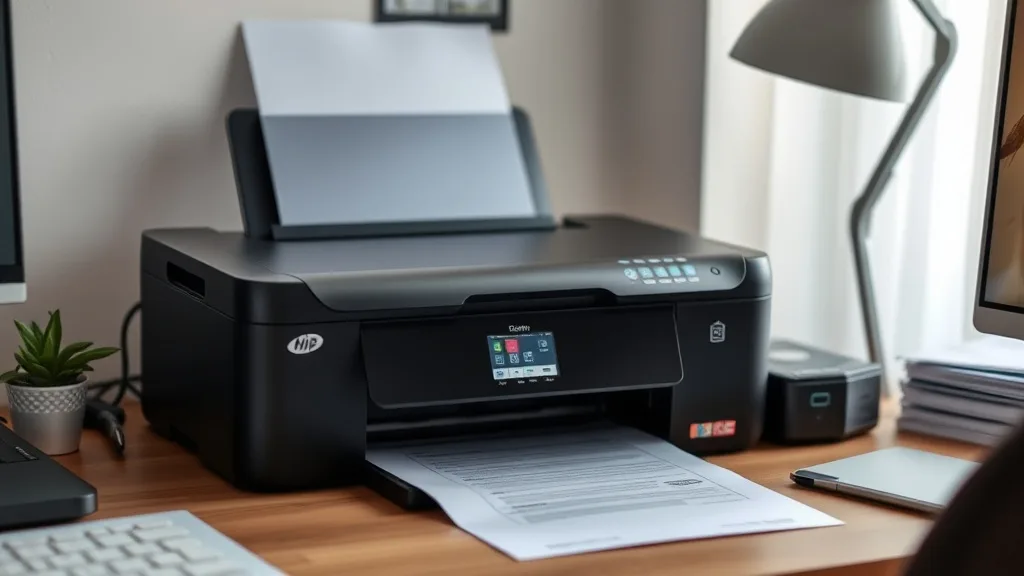
Many printer owners get burned by sky-high brand-name cartridge prices that turn “cheap printer” purchases into costly ink traps. If you’re looking for budget printers that are not only affordable upfront but also compatible with third-party ink cartridges — known for drastically lowering your cost-per-page — this review breaks down the best options. We’ll weigh cost, print yield, compatibility, and reliability so you can make an informed choice without falling into the OEM cartridge pricing trap.
Why Third-Party Ink Compatibility Matters
Original Equipment Manufacturer (OEM) cartridges often cost more than the printer itself, especially for color inkjets. Using third-party or compatible cartridges can reduce printing costs by 50% to 80%, but not every budget printer supports these cartridges equally. Some printers come with chip lockouts or firmware that disables non-OEM ink, while others tolerate compatible cartridges without issues. Choosing a budget printer that embraces third-party ink compatibility is essential for keeping long-term printing costs low.
What Makes a Printer Third-Party Friendly?
- Firmware openness: Does the printer accept refilled or compatible cartridges, or block them with chip recognition?
- Cartridge availability: Are third-party cartridges widely produced for the model?
- Yield per cartridge: Higher yield cartridges stretch your cost savings further.
- Print quality consistency: Can third-party cartridges maintain acceptable quality and printer health over time?
Balancing these factors gives you a printer that’s affordable initially and inexpensive to maintain.
See also: 20. Best compatible cartridges for Brother MFC printers
Top Budget Printers Compatible with Third-Party Ink (Under $150)
Phone cases - Sponsored - 15% off first order
Phone Case Gift - They pick the model · 2 minutes Code FIRST15GIFTBased on the criteria above, here are some printers that align well with third-party cartridge use. Prices and cartridge yields are approximate and may vary by seller and region.
| Rank | Printer Type | Approx. Price | Cartridge Yield (Black/Color) | Third-Party Ink Compatibility | Notable Features |
|---|---|---|---|---|---|
| 1 | Inkjet All-in-One | $100 | 500 / 300 pages | High | Wireless, Duplex |
| 2 | Laser Monochrome | $120 | 1,500 pages | Moderate | Fast Print Speeds |
| 3 | Inkjet Photo-capable | $130 | 400 / 350 pages | High | Photo Print Mode |
| 4 | Compact Inkjet | $90 | 300 / 200 pages | High | Small Footprint |
| 5 | Budget Laser Color | $150 | 1,000 pages (mono) 800 (color) | Moderate | Color Laser Output |
In-Depth Reviews
1. Inkjet All-in-One: The Most Versatile Budget Pick
This printer offers excellent third-party ink compatibility with many refill and compatible cartridge options widely available. Cartridge yields hover around 500 pages in black and 300 for color, giving an average cost-per-page reduction of 60% compared to OEM ink. It supports Wi-Fi and duplex printing, making it a great home office choice. Firmware updates rarely disrupt third-party cartridge recognition.
Pros:
- Excellent cost savings with third-party ink
- Solid print quality for text and simple graphics
- Multifunction scan/copy
Cons:
- Moderate speed, slower for duplex
- Color print quality is average, not for professional photos
2. Laser Monochrome: Low Cost Per Page, Go-To for Text Prints
Laser printers are naturally more ink-efficient due to toner use, and this model offers a 1,500-page yield on monochrome cartridges. Third-party toner is moderately priced and often reliable, though some brands impose toner chip locks requiring workarounds. It’s a solid choice if you primarily print black text documents and want consistent low running costs.
Pros:
- Very low cost per page for black prints
- Fast print speeds with good text crispness
Cons:
- No color option
- Some toner chip lockouts require technical fixes
3. Inkjet Photo-capable: Budget-Friendly Photo Printing with Cheap Ink
This model is popular among casual photo enthusiasts looking to reduce ink costs. Compatible cartridges maintain decent color saturation, though OEM inks still lead for longevity. Photo-focused modes and dedicated photo paper support make it versatile. Third-party ink costs cut overall photo printing expenses by over 50%.
Pros:
- Good third-party cartridge ecosystem
- Better color reproduction than general inkjets
Cons:
- Slightly lower print yield than standard all-in-ones
- Color longevity slightly reduced with non-OEM inks
4. Compact Inkjet: Space-Saving with Budget Ink Flexibility
Ideal for dorms, small offices, or tight desks, this compact inkjet printer supports a broad range of third-party cartridges. It’s the cheapest option with reliable compatible cartridge use, though yields are on the lower side, making it better suited for low-volume printing.
Pros:
- Very affordable initial price
- Broad selection of compatible cartridges
Cons:
- Lower page yields increase refilling frequency
- Basic feature set, no duplex or scanning
5. Budget Laser Color: Color Laser Prints without Breaking the Bank
Color laser printers traditionally have high upfront costs and toner prices, but this budget model buckles that trend. Offering moderate yields and third-party toner compatibility, it is a strong candidate for small businesses needing occasional color printing. Some compatibility issues may arise due to toner chips, so expect occasional troubleshooting.
Pros:
- Affordable color laser printer
- Moderate third-party toner options
Cons:
- Slightly higher cost per color page than inkjets
- Firmware updates can block some third-party toners
Calculating Cost Per Page (CPP) – The Key to Real Savings
Phone cases - Sponsored - 15% off first order
Titan Case - Precision fit · 2,000+ designs Code FIRST15TITTo understand true savings beyond sticker price:
[ \text{CPP} = \frac{\text{Cartridge Cost}}{\text{Page Yield}} ]
For example, if a compatible black cartridge costs $15 and yields 500 pages:
[ \text{CPP} = \frac{15}{500} = 0.03 \text{ USD per page} ]
Compare that to OEM cartridges costing $40 for similar yield:
[ \text{CPP} = \frac{40}{500} = 0.08 \text{ USD per page} ]
You’re paying less than half the price per page. Multiplying savings over hundreds or thousands of pages prints reveals substantial long-term benefits.
Compatibility Risks and Reliability Trade-Offs
While third-party ink cuts costs, it can raise risks:
- Chip Authentication: Some printers refuse to print with third-party cartridges due to embedded chip verification. This can be mitigated either via firmware management or choosing models that don’t enforce these locks.
- Print Quality Variability: Third-party inks can produce streaks, fading, or color mismatches depending on supplier quality.
- Printer Wear: Poor quality ink may clog nozzles or degrade components faster; however, many reputable compatible inks closely match OEM specs.
- Firmware Updates: Automatic firmware updates may introduce new blockades against compatible cartridges.
To minimize these, register your printer with compatible ink-friendly communities, and avoid automatic updates if third-party ink blocking becomes an issue.
Summary Table of Printer vs Ink Trade-offs
Phone cases - Sponsored - 15% off first order
Phone Cases For Charity - Every case supports a cause Code GIVE10| Factor | OEM Cartridges | Third-Party Compatible Ink |
|---|---|---|
| Cartridge Cost | High | Low to Moderate |
| Quality & Consistency | High | Variable, depends on brand |
| Printer Compatibility | Guaranteed | Depends on printer model |
| Chip Lockouts | None | Potential for lock/block |
| Print Yield Accuracy | Manufacturer rated | May vary slightly |
| Firmware Updates Impact | Minimal | Can block cartridge recognition |
| Long-Term Cost | Expensive | Substantially cheaper |
Final Thoughts
Budget printers compatible with third-party ink cartridges provide real savings if you choose wisely. Prioritize printers known for fuel openness and avoid those with aggressive chip lockouts or restrictive firmware. By carefully balancing cost per page, cartridge yield, and reliability, you preserve both your wallet and your print quality over time.
Frequently Asked Questions
Q: Can I use any third-party ink cartridge in my budget printer?
A: No. Third-party cartridge compatibility depends on the printer model and firmware. Check user reviews and compatibility lists before buying.
Q: Does using third-party ink void my printer warranty?
A: Not necessarily. Manufacturers often say yes, but most won’t deny warranty service unless damage is proven to be caused by third-party ink.
Q: How often should I update firmware if I want to use compatible cartridges?
A: Be cautious with automatic updates. Research if updates introduce new chip locks. It’s often best to delay or disable auto updates when using third-party ink.
Top Picks
Watchdog picks
- B0D8B24CTB
- 65 65XL Black Ink Cartridges Replacement for HP 65XL Black Ink Cartridge Work fo
- Brother LC3019BK Super High Yield Black Ink Cartridge
- B0854BN273
- E-Z Ink Remanufactured Ink Cartridge Replacement for 252XL Combo Pack for Epson
- AZ Compatible Toner Cartridge Replacement for Dell 1250, 1250BK / 1250C / 1250Y
- B0FMB4JBJ8
- B01N7V39QJ
Products in this guide
- HP OfficeJet Pro 9125e Wireless All-in-One Color Inkjet Printer, Print, scan, copy, fax, ADF, Duplex printing best-for-o
- HP OfficeJet Pro 8125e Wireless All-in-One Color Inkjet Printer, Print, scan, Copy, ADF, Duplex Printing Best-for-Home O
- HP OfficeJet Pro 9125 Wireless All-in-One Color Inkjet Printer, Print, Scan, Copy, Fax, ADF, Duplex Print/scan, Best-for
- HP OfficeJet Pro 9135 Wireless All-in-One Color Inkjet Printer, Print, Scan, Copy, Fax, ADF, Duplex Print/scan, Best-for