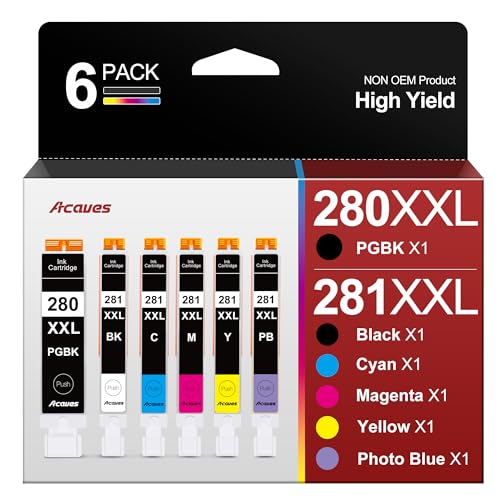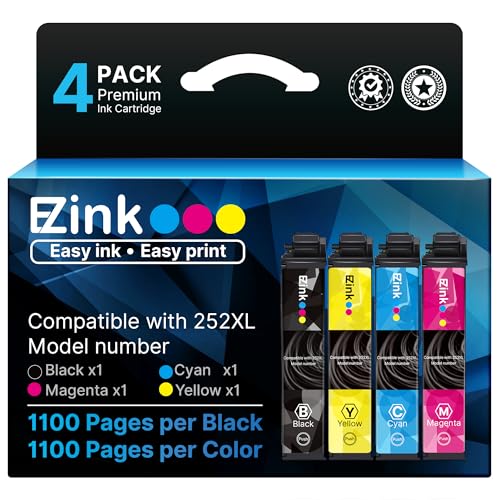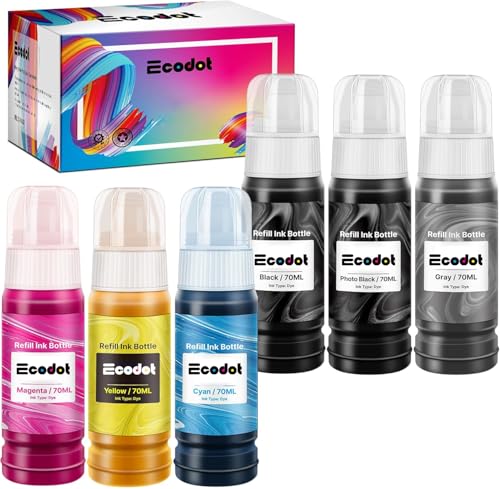
Printer ink pricing feels irrational because it partly is — manufacturers deliberately price printers as loss leaders and recover margin through ink and subscriptions. The questions below cover the actual mechanics behind that pricing and the concrete ways to spend less without switching your entire workflow.
The subscription math
Ink subscriptions like HP Instant Ink charge by pages printed per month regardless of ink coverage, which means they reward high-volume light printing and penalize anyone printing photos or graphics-heavy documents. Compare that against your actual printing habits before enrolling — a refillable tank printer sidesteps the subscription question entirely by bundling years of ink into the purchase price (see the Instant Ink question above for a specific model).
Where the real savings are
Phone cases - Sponsored - 15% off first order
Phone Case Gift - They pick the model · 2 minutes Code FIRST15GIFT
Between OEM XL cartridges, universal refill kits, and tank printers, the savings scale roughly with how much manual effort you’re willing to put in — an HP 67 tri-color 2-packCheck on Amazon → is a reasonable OEM middle ground, while third-party universal refill kits get you the lowest cost-per-page if you don’t mind the extra step. For the full year-over-year pricing breakdown across brands, see our ink pricing report.
Frequently Asked Questions
How many pages will an ink cartridge print?
It depends entirely on cartridge size and print content -- a standard-capacity cartridge like a HP 65 black cartridge typically prints 120-190 pages of text, while XL versions of the same cartridge can print 2-3x that. Manufacturer yield claims (based on the ISO/IEC 24711 standard) assume 5% page coverage, so photos and dense graphics will use up a cartridge much faster than the box suggests.
How often should you change printer ink?
There's no fixed schedule -- you change ink when the printer reports it's empty or print quality visibly degrades, not on a calendar basis. Light home users might replace a cartridge every few months, while a household printing 40+ pages a week could go through a standard cartridge in a few weeks.
How to get around HP Ink subscription?
The most direct way is to avoid an HP+ enabled printer at setup, or buy a printer designed to skip subscriptions entirely, like the HP Smart Tank 5000, which includes two years of ink in the box with no recurring charge. If you already own an HP+ printer, a factory reset during which you decline HP+ enrollment removes the subscription requirement, though you'll lose any promotional ink credits tied to the enrollment.
Is an ink subscription worth it?
It depends on your printing volume -- HP Instant Ink and similar programs charge by pages printed per month regardless of coverage, which favors households that print a lot of light-coverage documents and disfavors anyone printing photos or dense graphics. A refillable tank printer like the Epson EcoTank ET-2800 avoids the ongoing subscription question entirely by including years of ink upfront.
Is it cheaper to buy ink or a new printer?
For heavy OEM-cartridge users, buying a new low-cost printer can genuinely be cheaper than buying replacement ink, since manufacturers often sell printers near or below cost to drive future ink sales. A budget all-in-one like the HP DeskJet 2755 costs less than two sets of replacement XL cartridges for some printer models -- run the math on your specific printer's cartridge price before assuming the printer itself is the cheaper fix.
What is the cheapest place to buy printer ink?
Amazon Subscribe & Save and manufacturer refurbished/remanufactured cartridge listings are usually the cheapest reliable sources, typically undercutting big-box retail by 15-30% on OEM cartridges. For compatible and refill options, third-party ink specifically sold in multi-packs offers the lowest true cost-per-page, often 60-80% below OEM pricing.
Which ink subscription is best?
HP Instant Ink has the largest printer compatibility and most flexible tier structure; Epson ReadyPrint and Canon's PIXMA subscription cover their own printer lines similarly. The 'best' one is entirely dependent on which printer you already own, since these subscriptions are brand-locked -- there's no cross-brand ink subscription.
Which printer ink is the best value?
XL and combo-pack cartridges consistently offer the best cost-per-page among OEM options -- a 65XL black/color combo pack costs more upfront than standard cartridges but yields 2-3x the pages, which usually wins on a per-page basis. Compatible and refill-kit ink beats OEM value by a wide margin if you're comfortable with third-party cartridges.
Which printer ink is the least expensive?
Universal refill kits, such as an Aomya universal dye ink refill kit, produce the lowest true cost-per-page of any option since you're paying for bulk ink rather than a pre-packaged cartridge with its own manufacturing and chip costs. The tradeoff is more manual effort and slightly higher risk of a messy refill compared to swapping a factory-sealed cartridge.
Who has the best deals on printer ink?
Amazon (especially through Subscribe & Save discounts), Costco/Sam's Club for bulk multi-packs, and manufacturer direct sales during back-to-school and holiday promotions tend to have the most consistent discounts on OEM ink. For compatible/generic ink, pricing is already discounted year-round relative to OEM, so timing matters less than it does for brand-name cartridges.
Why are laser printers being phased out?
Laser printers aren't actually being phased out overall -- they remain dominant in offices -- but home laser printer sales have declined as manufacturers push subscription-friendly inkjet and tank printers, which have better profit margins on recurring ink/toner sales than the infrequent toner purchases laser printers require. For home users who print mostly text, a laser printer is still often the lowest total cost of ownership over several years.
Why is printer ink getting so expensive?
OEM printer manufacturers make a large share of their profit on consumables rather than hardware -- printers are frequently sold near cost, with ink and toner priced to recover that margin and more over the printer's lifetime. Rising raw material costs and manufacturers reducing cartridge ink volume while holding prices steady (effectively a quiet price increase) have both contributed to the price climb over the past several years.
Why is printer ink more expensive than the printer itself?
This is the razor-and-blades business model in its purest form: printer hardware is sold at or near cost (sometimes at a loss) specifically because the manufacturer expects to profit from years of consumable ink and toner sales afterward. It's the same model used for razors, gaming consoles, and coffee pod machines -- the entry device is cheap, and the recurring consumable is where the margin lives.